
Thing
Lightsaber
The lightsaber, also referred to as a laser sword by those who were unfamiliar…
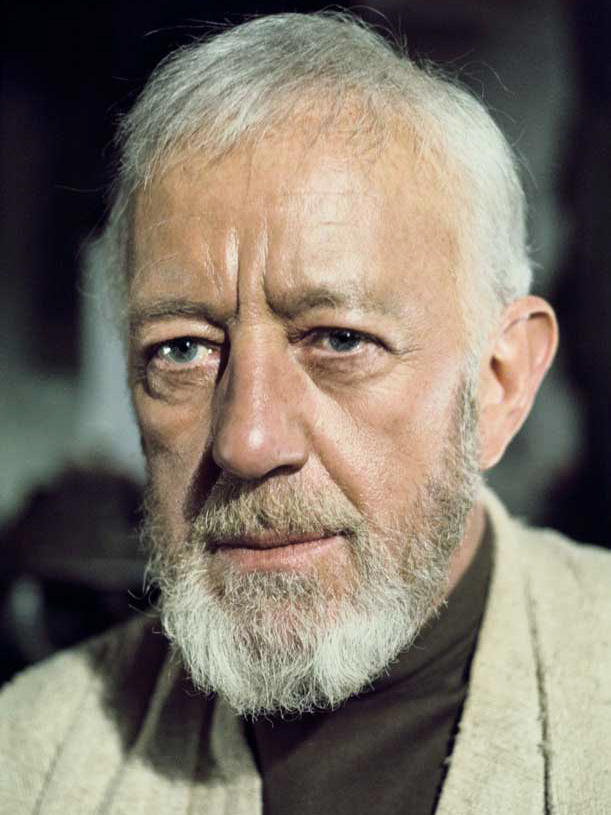
An elegant weapon for a more civilized age.
The lightsaber, also referred to as a laser sword by those who were unfamiliar with it, was a weapon usually used by the Jedi, Sith, and other Force-sensitives. Lightsabers had a plasma blade emitted from a usually metal hilt, and could be shut off at will or at the touch of a button. The hilt contained a power cell, like the Diatium power cell in Darth Vader's lightsaber. It also contained a kyber crystal which had been attuned to the Force by a Jedi, and which amplified the energy from the power cell to create the plasma beam, as well as containing it within a blade-like field. The energy blade had no mass, but lightsabers operated on principles of controlled electromagnetic arc-wave energy, creating a gyroscopic effect that made them challenging to handle. It was a weapon that required skill and training, and was greatly enhanced when used in conjunction with the Force. Though also used by the Sith, the lightsaber was synonymous with the Jedi, with some in the galaxy believing only Jedi could use lightsabers.
Lightsabers were generally used for both offense and defense. A lightsaber could cut through virtually anything, from flesh to blast doors. The only ways to block the incoming attack of a lightsaber was with a weapon made with material that conducted energy, such as an electrostaff and a Z6 riot control baton, resistant metals like beskar and cortosis, another lightsaber or an ichor sword. When used defensively, a Force-sensitive could deflect blaster bolts with a lightsaber, and with skill, could even reflect the shots back toward the shooter or some other target. Experienced Jedi could even employ their lightsabers to absorb Force lightning. Most practitioners used one single-bladed lightsaber, though some used double-bladed lightsabers or even multiple lightsabers at once. Despite lacking Force-sensitivity, the cyborg General Grievous was capable of wielding four lightsabers at once thanks to his advanced mechanical body and enhanced cybernetic brain.
Lightsaber combat was divided into seven Forms: Form I, Form II, Form III, Form IV, Form V, Form VI, and Form VII.
Early history
I don't get to treat many lightsaber wounds. It's such an old weapon. People today prefer to fight with rifles and blasters, from long range.
Sounding like no other weapon in the galaxy, lightsabers were used thousands of years before the age of the Galactic Republic, seeing use in the Great Scourge of Malachor. They were also used in the Battles of Rashfond and the Peacekeeping of Parliock, The proto-saber was an ancient type of prototype lightsaber.
Republic Era
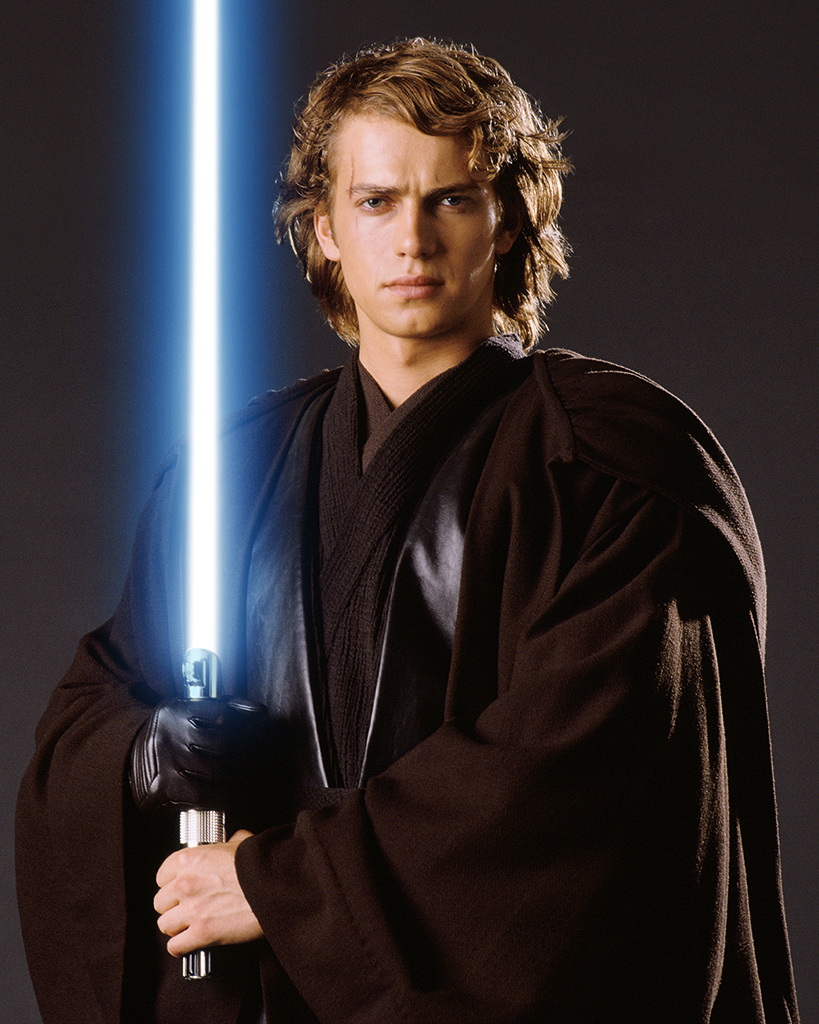
During the history of the Jedi Order, the lightsaber was considered to be the Jedi's only true ally in battle. As Master Obi-Wan Kenobi once declared to his Padawan Anakin Skywalker in the days of the late Republic, the lightsaber was a Jedi's life. Jedi saw the lightsaber as a symbol of the care that they would wield using their gifts given by the Force, and also served as a message to their opponents: mastering the lightsaber required great skill and training. The choice of the saber was also the symbol of their role and duty as protectors, not destroyers, and the fact that the Jedi did not seek power and only sought to stand tall against darkness. Still, Jedi knew they would need to be more than their lightsabers.
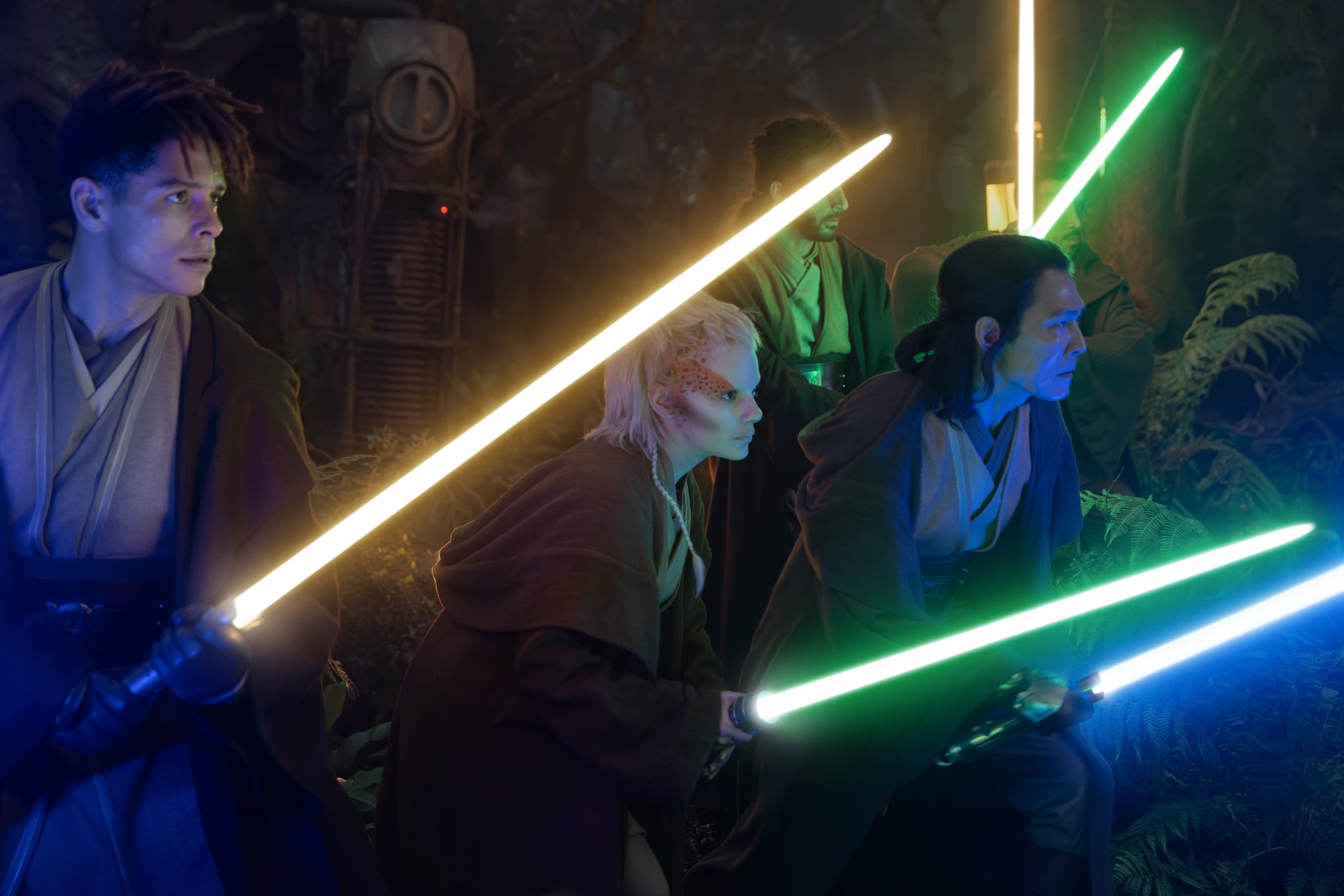
When Padawan Enya Keen lost her lightsaber during a mission to Dalna, her master, Char-Ryl-Roy, reminded her that she would need to act as a Jedi without the weapon. While finding a kyber crystal was still a sacred part of a Jedi's duty and Keen felt like losing her lightsaber would feel like losing part of herself, she willingly gave away the crystal if it meant finding more about the Path of the Open Hand and its plans. During the sabotage of the Steady Wing in 232 BBY, Padawan Imri Cantaros dealt with emotional struggles that lead to his lightsaber beam turning transparent and weak. Lightsabers took on a more prominent role in galactic affairs as the Clone Wars came to pass. Jedi, previously peacekeepers, became Jedi Generals of the Grand Army of the Republic, and thus began using their lightsabers more often than they had in their role of peacekeeping. Despite his lack of Force-sensitivity, General Grievous was trained by Count Dooku in lightsaber combat and could split his arms in two and wield up to four lightsabers at the same time. Grievous targeted Jedi individually and stole their lightsabers as trophies, and by the conclusion of the war, had roughly a hundred in his macabre collection.
Imperial Era
General perception
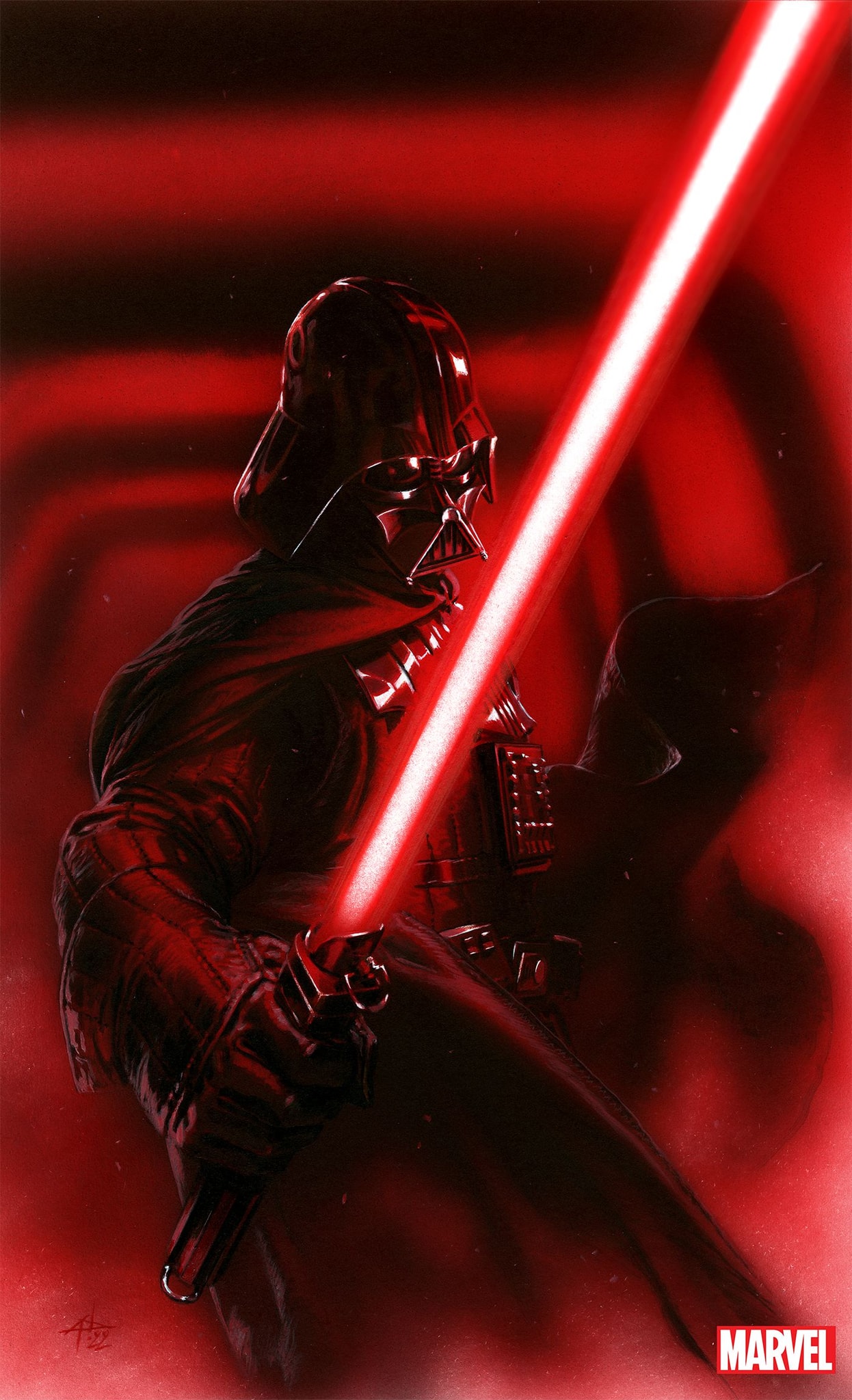
And to think one day our children will ask what is this thing? This relic of a corrupt institution destroyed by its own arrogance.
For the majority of the Empire's reign, the only lightsabers that were prominently used were those of the Sith Lord and Imperial enforcer Darth Vader and the Inquisitors who served him, with the Inquisitors eventually vanishing alongside the Jedi they had hunted. For a time, Vader had remained largely hidden from the galaxy, leaving the Inquisitors to—as noted by the later historian Beaumont Kin—possibly be more well-known lightsaber wielders. Eventually, however, Vader became a publicly known and widely feared figure.
The majority of the Jedi Order, meanwhile, had been reduced to scattered remnants in hiding across the galaxy who largely kept their lightsabers hidden, lest they draw Imperial attention. The Sith Lord Darth Sidious, as the emperor of the galaxy, largely ruled from a distance and was unable to use his own lightsabers in combat often. Vader wielded a dual-phase lightsaber, a design of an older, more dangerous generation. With the disappearance of the Inquisitors and through his own public emergence over the course of the Imperial Era, Vader became the primary example of someone in the galaxy who fought with a lightsaber.
However, other than Vader as he became an increasingly known figure, the general public saw little of lightsabers during the Imperial Era. Indeed, surviving Jedi Master Obi-Wan Kenobi regarded the lightsaber as a past weapon created in "a more civilized age." Senator Daho Sejan had hope that general knowledge of the lightsaber would die off in due time, leaving only Imperial narratives about the fall of the Jedi to be told whenever a child asked what it was. During the Galactic Civil War, Domina Tagge of the Tagge Corporation tried to recreate the lightsaber through the Tagge protoblade.
Survival of the Jedi
Someday, when your children see this, they'll know the Jedi never stopped fighting for them.
All the same, there were still lightsabers used by Jedi survivors and those they trained, like Obi-Wan Kenobi, Luke Skywalker, Cere Junda, Cal Kestis, Tensu Run, Ahsoka Tano, Kanan Jarrus, and Ezra Bridger. While Kenobi, for a period, kept his lightsaber absolutely hidden, he was inspired to take back up his weapon and found his hope for the future rekindled through his experiences with the young Luke Skywalker and Leia Organa, resulting in him effectively using his weapon against Vader during a duel on a barren moon in 9 BBY. Meanwhile, Kestis had been using his lightsaber as part of his personal crusade against the Empire, through which he became a well-known criminal. All the while in the Great Jedi Purge, numerous surviving Jedi were wiped out by Vader and his Inquisitors.
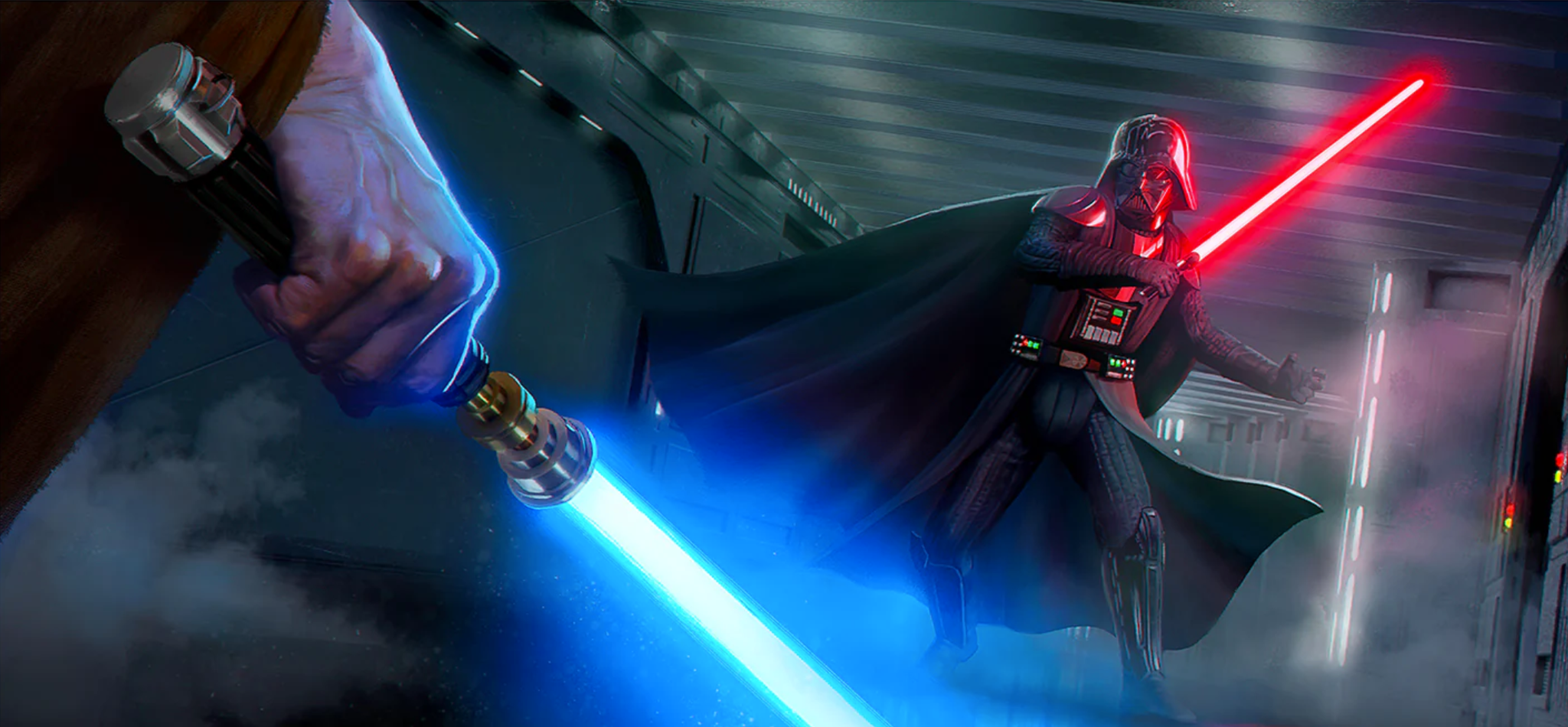
In 1 BBY, Kenobi and Vader would engage in a final duel aboard the DS-1 Orbital Battle Station, in which Kenobi allowed himself to be cut down so as to give Luke Skywalker, Leia Organa, and his other allies a chance to escape aboard the freighter Millennium Falcon. Before his death, Kenobi had formally begun Skywalker's Jedi training while withholding the truth from him that Vader was his own father, Anakin Skywalker. Instead telling Luke that Vader had murdered his father, Kenobi presented the young Skywalker with his father's lightsaber as a gift, with Skywalker using the blade during his early training. During the assault on Cymoon in 0 ABY, shortly after Kenobi's death, Skywalker attempted to duel Vader for the first time, although he did not have the training necessary to stand against the Sith Lord. Vader, however, was surprised to see Skywalker was using his own past lightsaber, which led to Vader's investigation into the young man's identity.
To discover Skywalker's identity, Vader hired the bounty hunter Boba Fett, who clashed with the young Jedi trainee when Skywalker visited Kenobi's abandoned home. Skywalker used his lightsaber in the skirmish and escaped, leaving Fett with nothing but the young man's name when he reported back to Vader. Unknown to Fett, revealing Skywalker's name proved to Vader that he had a son, whom he resolved to convert to the dark side and use to overthrow the Emperor. Afterward, Vader visited Kenobi's abandoned home, where he determined from the lightsaber and blast marks left behind that his son was strong in the Force but untrained. As Vader hunted for his son, Skywalker continued to train in the Force, even refining his skills with a lightsaber in that time. In the meantime, Vader also found himself besieged by rivals to his station, including the lightsaber-wielding warriors Aiolin Astarte, Morit Astarte, and Commander Karbin. As a successor cyborg to Grievous, Karbin wielded four lightsabers at once like Grievous before him. Eventually, Vader defeated his rivals and rose higher in formal station than before, establishing himself as supreme commander of the Imperial fleet.
Return of the Jedi
His lightsaber.
Ah, yes, a Jedi's weapon. Much like your father's.
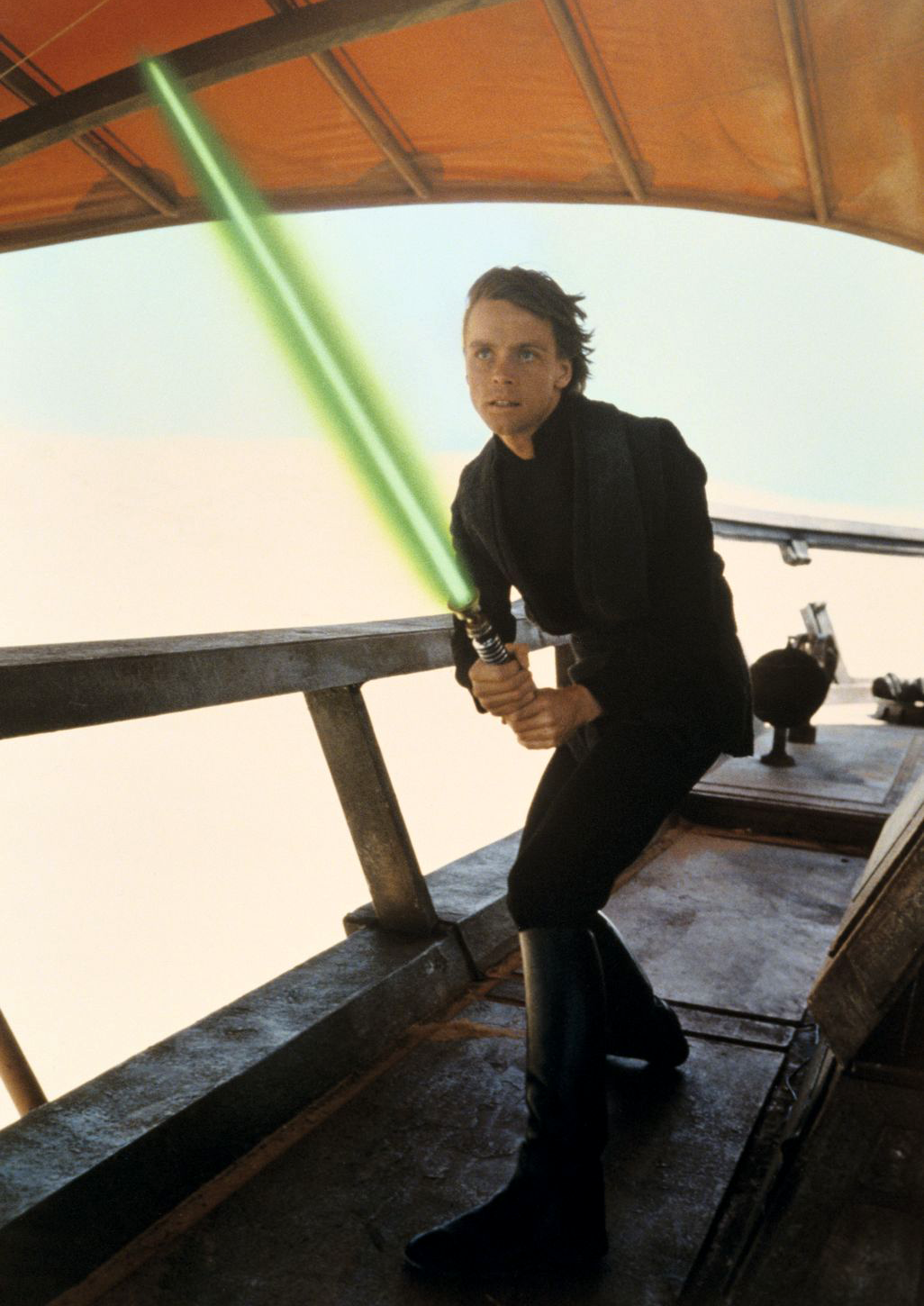
Vader finally had a chance to reveal his former identity as Anakin Skywalker to his son in 3 ABY during their lightsaber duel on Bespin. While impressed by his son's skills, Vader outmanoeuvred his son and used his lightsaber to sever his hand, which fell with the Skywalker lightsaber into the depths of Cloud City, where it would later be found by an Ugnaught. Vader then revealed his identity as Skywalker's father, to which Skywalker reached in horror and threw himself away from Vader, only being saved by the intervention of Organa aboard the Millennium Falcon. Skywalker later made a return trip to Cloud City to try and recover his lightsaber but could not find it, deciding in the process a Jedi needed to be more than their weapon. He would, however, recover an ancient yellow lightsaber to use in the interim before building his own green lightsaber.
Vader, meanwhile, launched several failed gambits to unseat the Emperor on his own, although he ultimately relented to his master's power and felt he had no choice but to obey Sidious. In 4 ABY, Sidious arranged for a new, final lightsaber duel between father and son during the Battle of Endor, claiming to Vader they would corrupt Skywalker to join them. In truth, Sidious resolved to see Skywalker cut down his father and take Vader's place at his side. During the duel, when Vader threatened to turn Organa to the dark side upon learning she was his daughter, Skywalker lashed out in anger and severed his father's hand, leaving Vader's lightsaber to fall into the depths of the DS-2 Death Star II Mobile Battle Station. However, he refused to give into his rage and threw his lightsaber away, standing as a Jedi against Sidious. Out of love for his son, Vader, returning to the light side as Anakin Skywalker as Sidious lashed out at the defenseless Luke, then surprised and threw the Emperor to his death, succumbing to his own wounds shortly thereafter. Luke reclaimed his lightsaber before escaping the second Death Star.
New Republic Era
After the Empire was defeated, Luke began training a new generation of Jedi. Tano adopted the Mandalorian Sabine Wren as her Padawan. Wren had previously taken on the Darksaber before becoming Ahsoka's padawan, taking on Bridger's lightsaber as her own during her apprenticeship. In the wake of the conflict on Peridea, both ended up stranded in the far galaxy as Grand Admiral Mitth'raw'nuruodo "Thrawn" had returned. Bridger, with a new lightsaber in his possession, did manage to return to the galaxy as well, however.
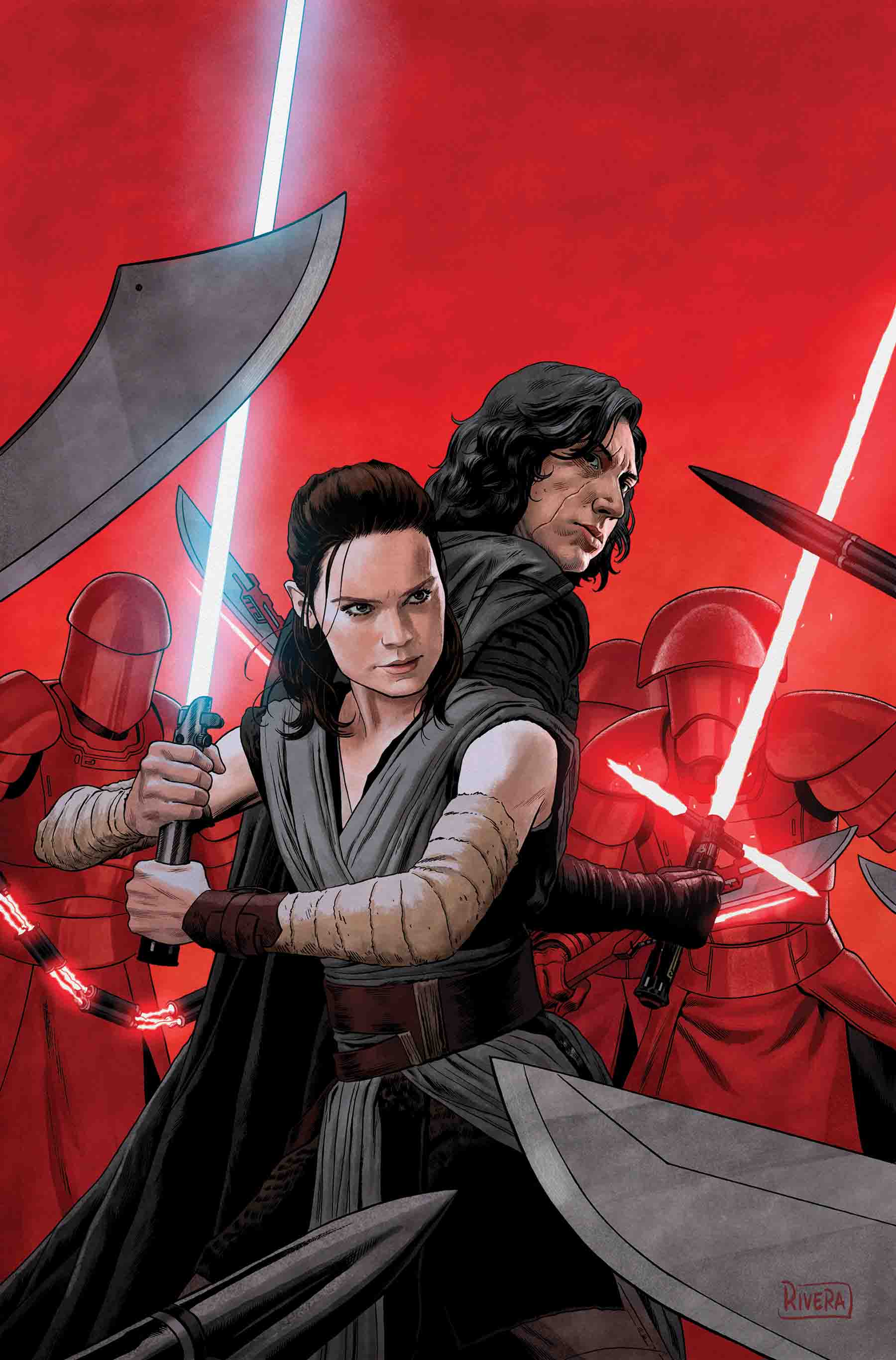
Skywalker's new generation of Jedi were killed in the destruction of his Jedi temple, once again leading to a time where the only prominent lightsaber user was a dark sider, Kylo Ren. That all changed when a scavenger, Rey, discovered the Skywalker lightsaber and ultimately came to train under Luke Skywalker and his twin sister Leia Organa to combat Kylo Ren and the First Order during a war against the Imperial successors. After the war, Rey ritually buried her masters' lightsabers at the Lars Homestead on Luke's home planet, Tatooine, to end the Skywalker family's suffering. She ignited her newly crafted lightsaber to show her complete journey as a Jedi, and, to honor the Skywalkers' legacy, she took the Skywalker name as her surname after receiving the blessing from the Force spirits of her masters when she was asked by a local.
Components
A lightsaber has five main parts. The power cell, the casing, the focusing lens, the emitter and, of course, the crystal. The rest is just wiring, an on/off switch, and whatever fancy extra bits people want to build in. All in all though, it's a pretty simple device.
A lightsaber drew power from an appropriately-sized power cell. Parts that would work to make a lightsaber include modulation circuits and an energy gate. Ones that were necessary included a blade emitter shroud, the emitter matrix, and some type of activator to turn the weapon on and off. Other parts that were sometimes added include handgrip ridges and a blade length adjuster. Some lightsabers also featured a non-lethal low-power setting used for training. Single-bladed lightsabers usually had a belt ring so they could be hung from a belt hook, or a wheel-shaped attachment that slotted into a matching belt clip on the owner's belt when not in use.
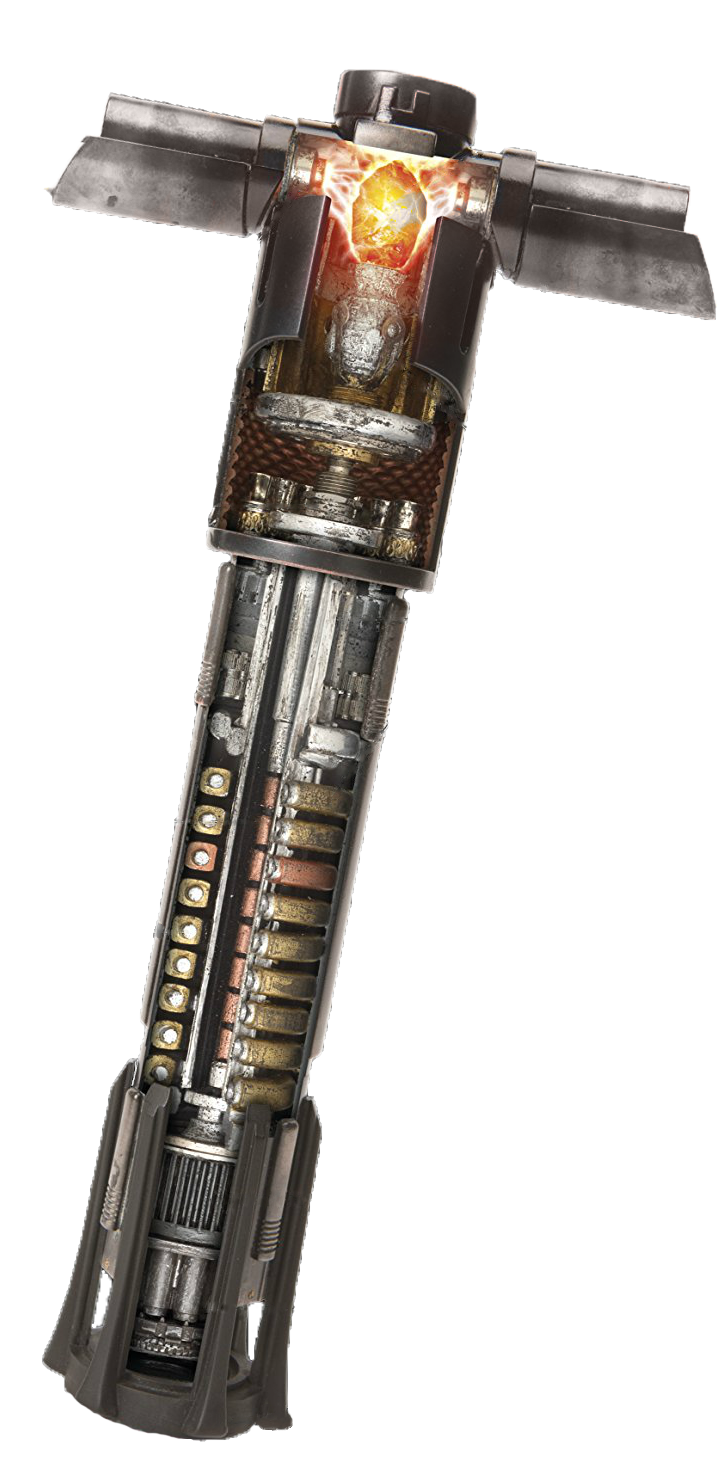
Specially designed lightsabers could even use unstable crystals, such as Kylo Ren's lightsaber, which featured two laterally facing vents designed to divert excess energy away from the cracked crystal and keep the lightsaber stable. This also had the effect of creating a protective crossguard.
During assembly, it was important to not accidentally invert the emitter matrix; when activated the lightsabers' power grid would backfire. At best this could cause the blade to quickly short out, but if it was left on, the faulty weapon would violently explode, potentially killing those in close proximity.
Aesthetics
It's a metal cylinder, about this long, with black grips and a few switches on the side.
Lightsaber hilts were made up of multiple parts that enveloped and protected the internal components. Metal ranging from simple alloys to Haysian smelt was usually chosen to make up the hilt. However, other materials were also chosen by lightsaber users, such as the Jedi youngling Gungi, who made use of a lightsaber with a casing carved from the wood of a Brylark tree, whose wood was as strong as metal. Some hilts were even crafted with gems. Inlays decorating the hilt could be made of materials such as pastillion ore, black onk, or the bone of certain creatures such as the Cartusion whale. Each piece of the hilt was aesthetically tailored towards one of multiple different design philosophies, which both informed and were informed by the maker's choice of materials, ideology, and personal preferences. A more practical design choice a user could make was to fit the weapon to their species' particular handgrip.
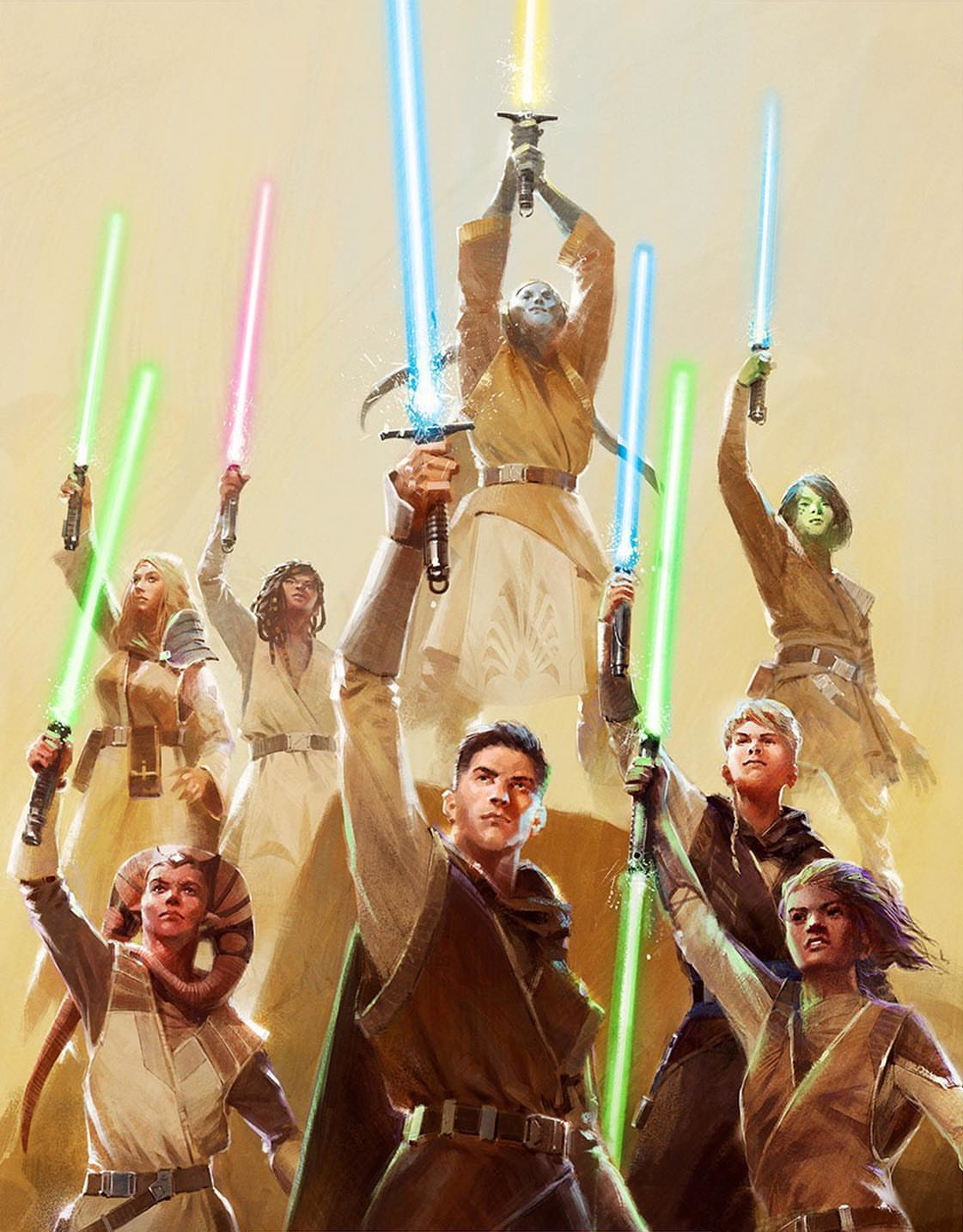
The Jedi Order of the late Galactic Republic made use of four styles: Duty and Resolve, Peace and Justice, Elemental Nature, and Valor and Wisdom. The former two were simple designs intended to reflect the Jedi commitment to a life of devotion to the Force and the Order's ideals. The latter two made use of resilient natural materials derived from flora and fauna to evoke the living Force.
The Sith Order made use of two styles: Passion and Strength, and Power and Control. Both were characterized by sharp and strong forms that showcased their owners' brutality, relentlessness, and insatiable desire for supremacy.
Another style, Protection and Defense, was favored by the earliest Force users in ancient times. It featured designs and inscriptions with meanings that have become shrouded in mystery, but the style itself was believed to have been created with the intent of conferring anonymity upon and symbolizing the emotional detachment of the wielder, who would use their lightsaber strictly for personal protection.
Cutting power
It's heavier than I thought.
Energy constantly flows through the crystal. You're not fighting with a simple blade as much as you are directing a current of power.
The power of the energy blade was so great that it could cut through almost anything. One important note about lightsaber wounds was that they rarely bled profusely, even when a limb had been severed. This was because the energy blade cauterized the wound as it passed, and thus even a severe wound did not tend to bleed heavily.
Lightsaber-resistant materials
Aside from the blade of another lightsaber, there were rare materials that could withstand a lightsaber blade:
Armorweave are material used on various pieces of clothing, including capes, as armor. It was also capable of resisting a lightsaber strikes. The Jedi Temple Guard had special armor robes incorporated layers of armorweave to provide them with an effective defense against blaster bolts and lightsabers.
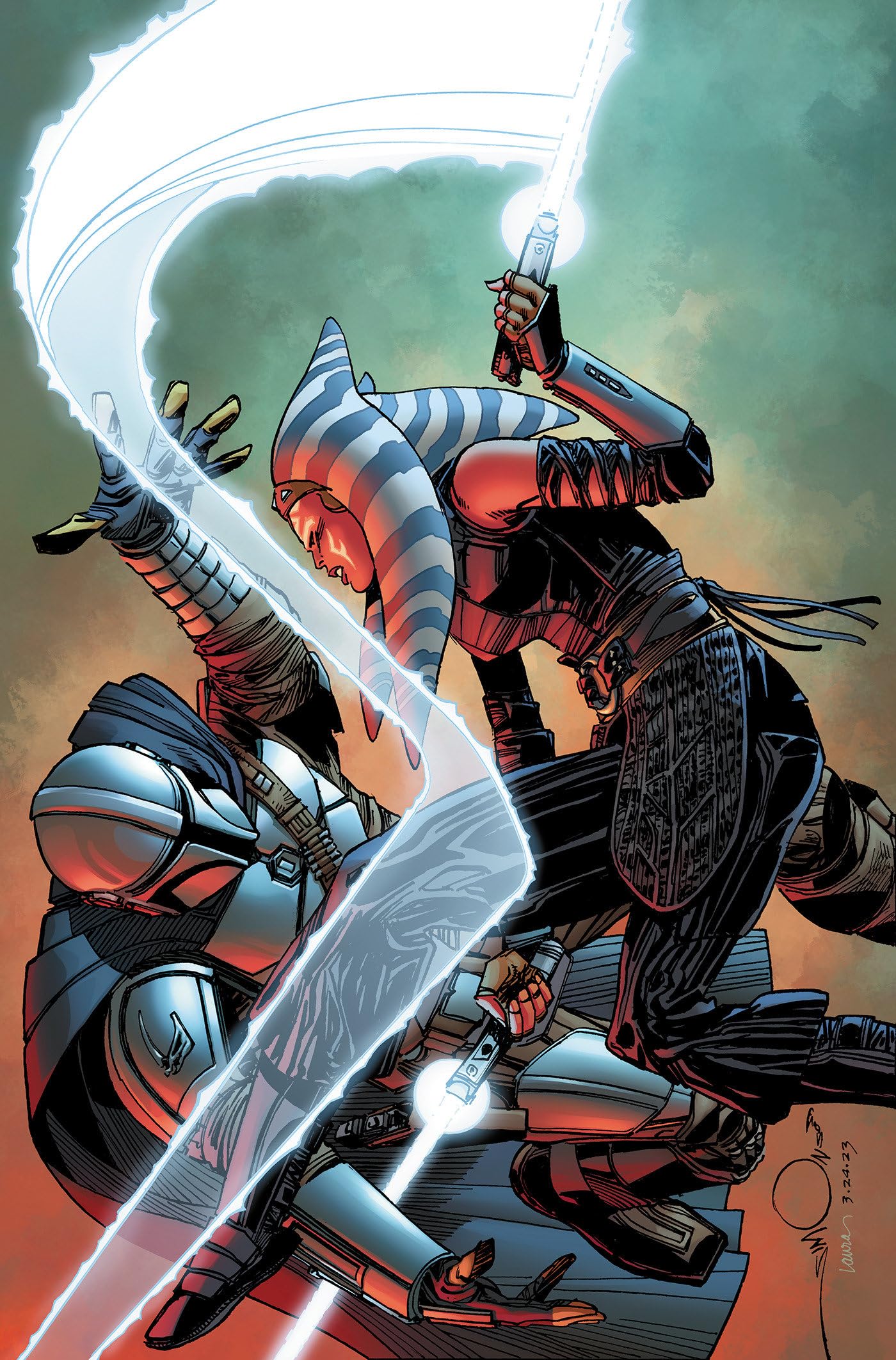
Beskar was specially crafted steel made from an iron found only on the planet Mandalore and its moon Concordia. It could repel lightsaber strikes for a brief time in its purest form. Examples of its use in that way included Din Djarin's armor, which resisted Ahsoka Tano's lightsaber blades, or the beskar spear offered to Din Djarin by Morgan Elsbeth, the magistrate of Calodan, which was also used to fight against Tano's sabers.
The Praetorian Guard armor was able to resist lightsaber strikes, with the gauntlets being capable of parrying one directly. However, a direct thrust or stab could still penetrate the armor. Their high-tech weapons are also resistant to lightsaber strikes.
Cortosis armor, made by specially weaving cortosis fibers within a protective matrix, was able to redirect a lightsaber's energy into itself which would cause the lightsaber's blade to temporarily shut off upon contact with the armor.
Magical ichor weapons like Mother Talzin's sword is able to resist lightsaber strikes.
A personal energy shield powered by extremely rare kohlen crystals was impervious to kyber crystal lightsabers. However, swapping out a lightsabers' kyber crystal for a kohlen crystal would produce a low-powered orange blade which was capable of slicing through the shields.
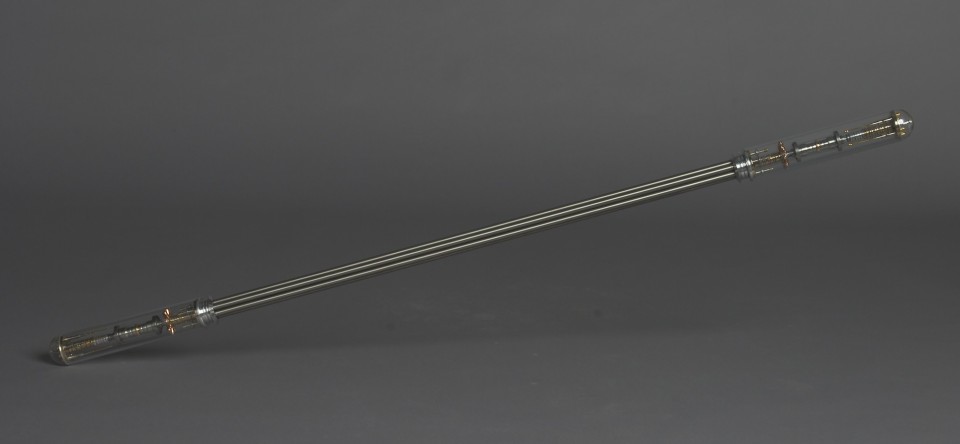
The rare metal phrik is impervious to lightsaber blades. A staff made of this material was once on display during the Valo Republic Fair, which was taken and used by the Nihil Tempest Runner Lourna Dee to fend off the Jedi Archivist OrbaLin. Electrostaffs are made of phrik, making them resistant, but not invulnerable, to lightsabers.
Qi'ra's electro swords are capable of emitting electrical charges to effectively repel and resist clashing with a lightsaber without them being damaged.
A form of durasteel used in the Megadroid's armor was invulnerable to lightsabers strikes.
Utility
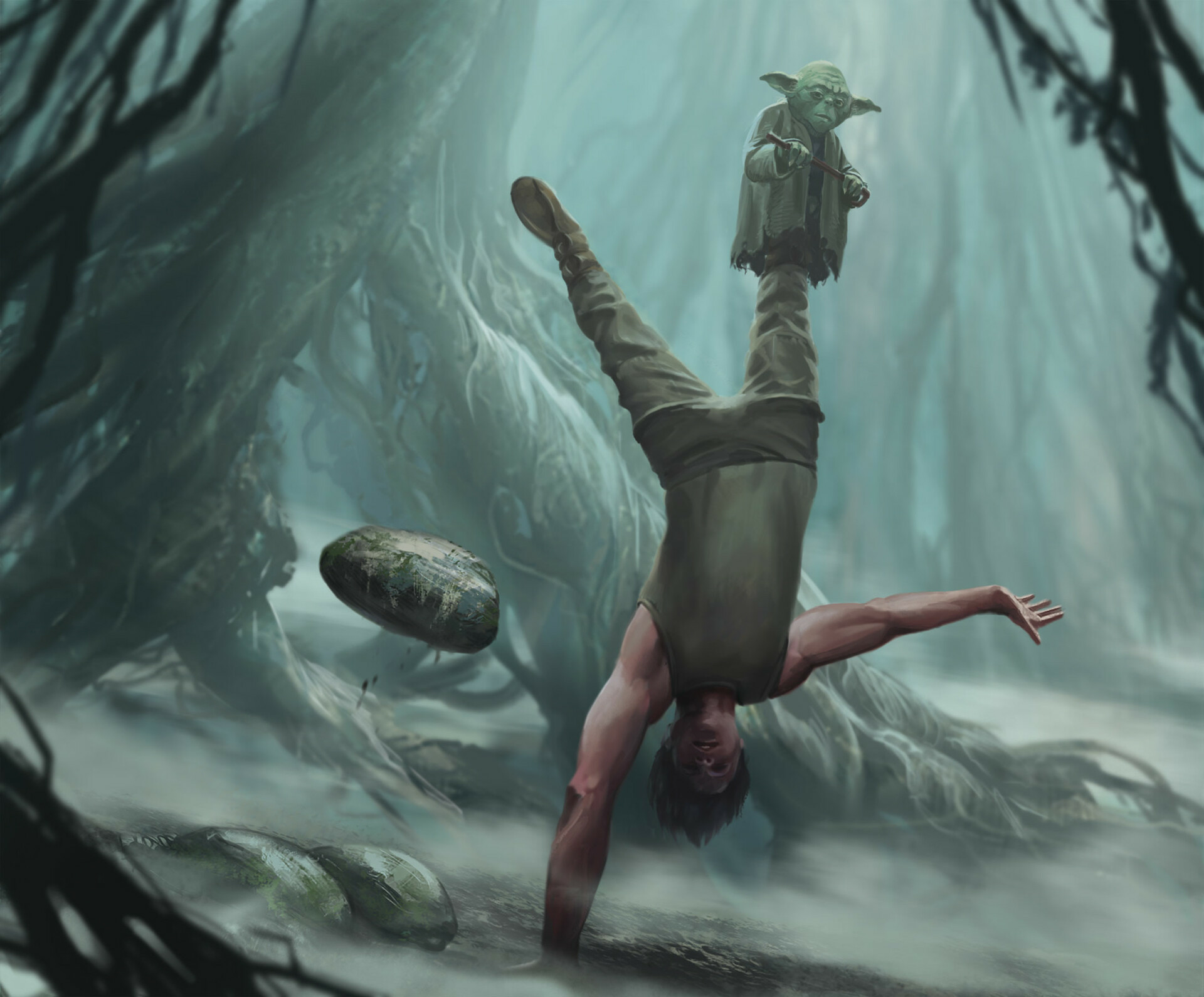
On the aquatic planet of Mon Cala, the Jedi Kit Fisto, Anakin Skywalker and Ahsoka Tano were all able to use their lightsabers underwater with no ill effects. Whilst in areas of low light, the glowing plasma blade could function as a convenient light source, demonstrated by Jedi Knight Anakin Skywalker, Jedi Masters Yoda and Obi-Wan Kenobi, along with renegade Sith Lord Savage Opress.
Components
A lightsaber was built up from several different components: blade emitter, focusing lens, cycling field energizers, main hilt, kyber crystal, lightsaber energy core, hand grip, inert power insulator, and the pommel cap. All of these components were incredibly important to keeping the lightsaber fixed together and allowed a Jedi to fight without it falling apart and stopped the saber from exploding upon activation. Every lightsaber's hilt was customised to the individual Jedi's needs and preferences, but no matter the appearance, each weapon contained the same basic element - Power Insulators, cycling field energizers, energy modulation circuits, a focusing lens, a blade emitter, and most importantly, the energy core which contains a kyber crystal. Once a few control dials were added, which would have been responsible for changing the intensity and length of the blade, the lightsaber would be complete.
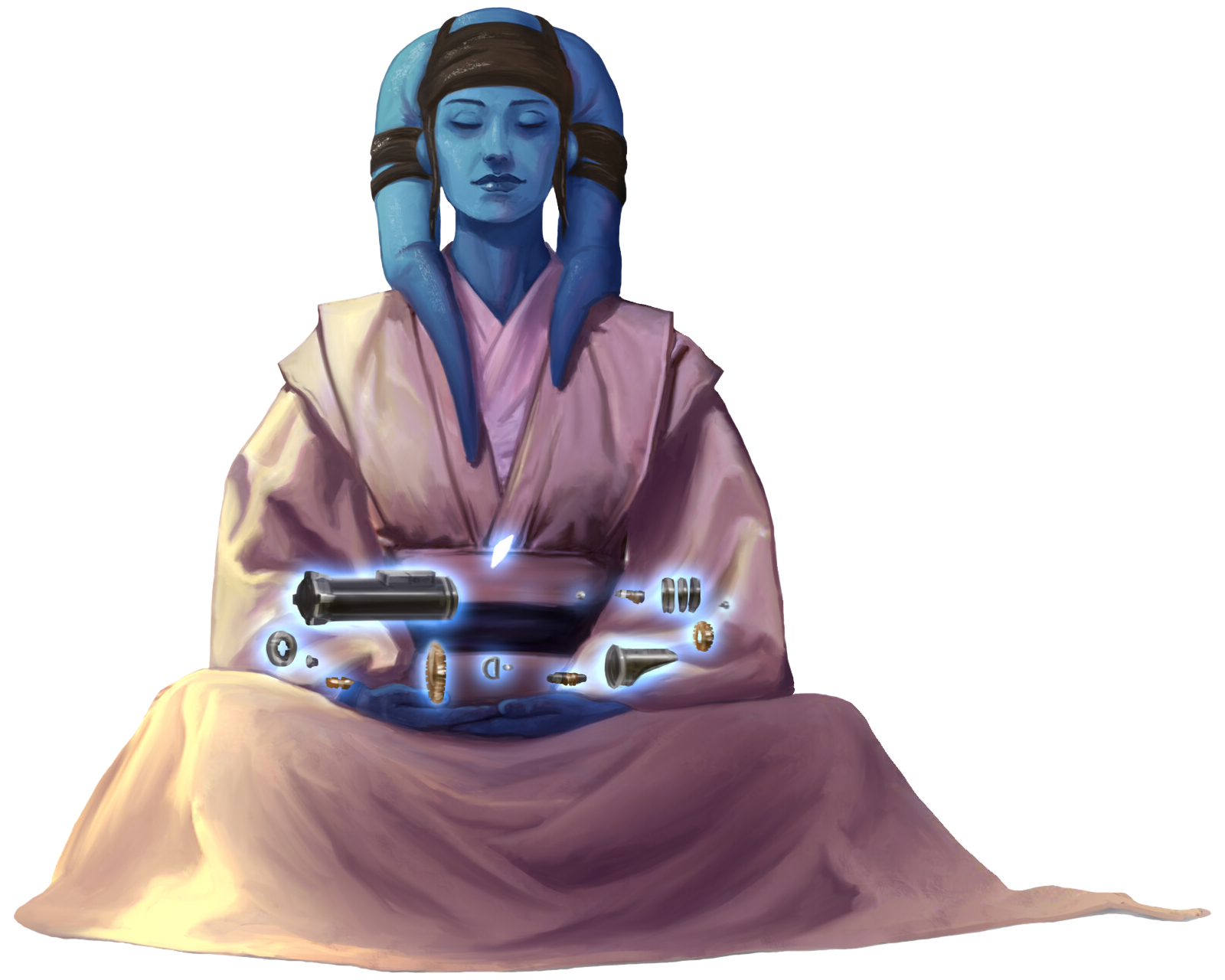
Kyber crystals
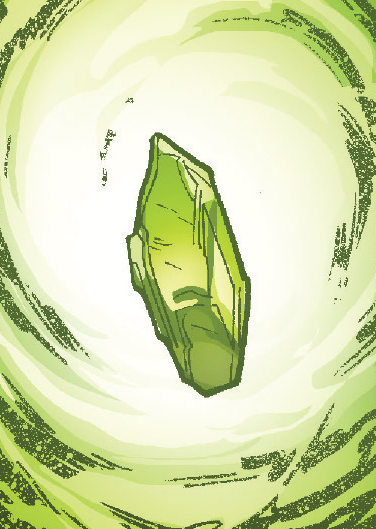
The heart of the lightsaber, the kyber crystal is, focuses the force from the Jedi, it does.
Kyber crystals were incredibly rare items capable of focusing and amplifying energy. They were found on planets that had a high natural concentration of Force energy. The main planets in which they were found were Ilum and Jedha, however Ilum was more commonly used as it was the planet in which the Gathering took place, where the Jedi younglings went to actually construct a lightsaber. Each kyber crystal was unique and required a Force-sensitive individual to align and activate it during the lightsaber assembly process. Once found, a kyber crystal would have originally been clear, but once it was awakened by the Force, its color would shift to match the nature of the saber's master. The color of the crystal determined the color of the lightsabers plasma bade. Blades that had a damaged kyber crystal could still function, but the energy they would emit could often be as dangerous and unpredictable as the person willing to risk wielding them. Some individuals such as Kylo Ren wielded these unstable crystals, usually with modifications to accommodate the unstable kyber.
Construction process
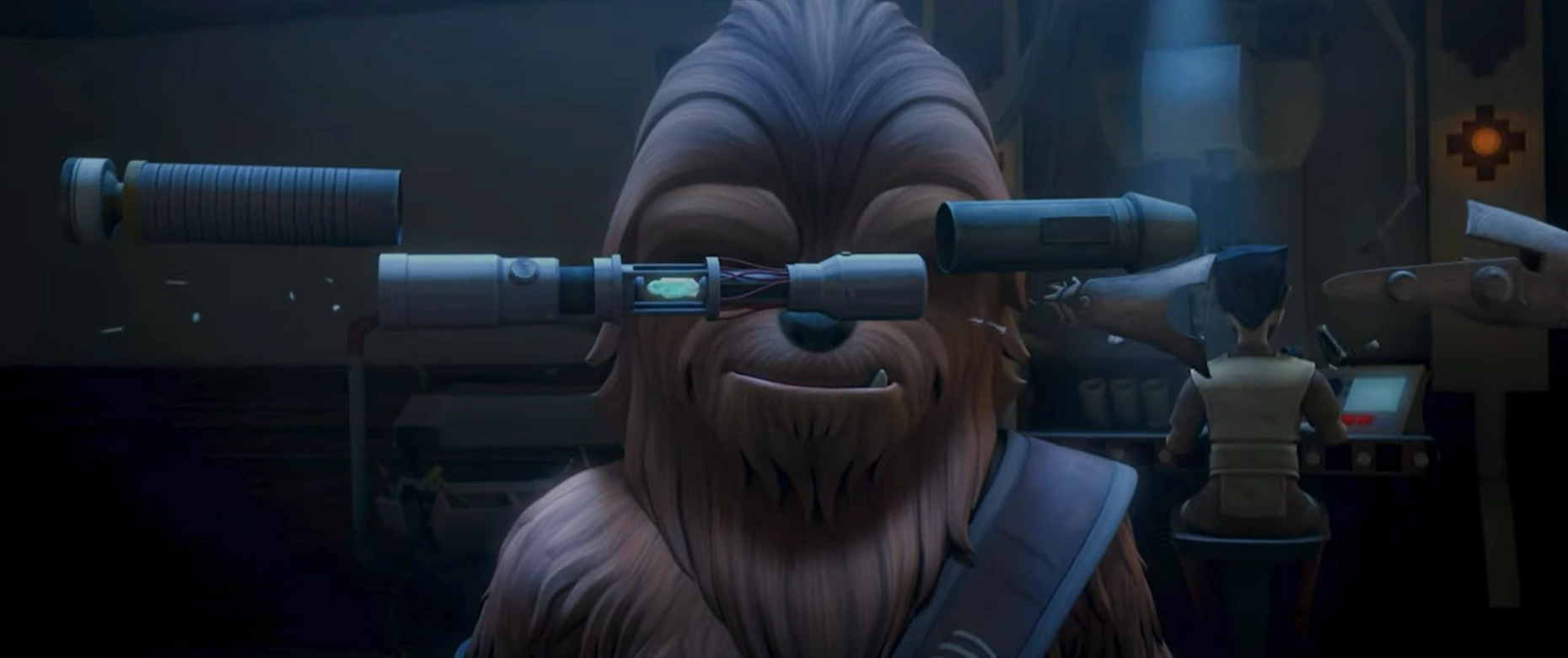
Under typical Jedi tradition, the construction of a lightsaber began on the planet of Ilum. In a very specific time in the planet's solar cycle, a small group of Jedi younglings would begin the one thousand year old ritual known as the Gathering, escorted by a Padawan. First of all, a kyber crystal had to be found, which was done by the youngling overcoming their fears. Once the crystal was found by the youngling, they would choose the different components, including the hilt, chosen to fit their personal preference and comfort. Next, the youngling would begin to construct their lightsaber. This was done using telekinesis whilst following the guidance given to them by an engineer. Once completed, the lightsaber would have been ready to ignite. As well as this, the younglings then had the knowledge to construct a lightsaber in the future should their current one be destroyed. With the fall of the Jedi Order, however, the specifics as to how a Jedi might construct their lightsaber changed as Jedi instead used whatever resources and opportunities arose for them.
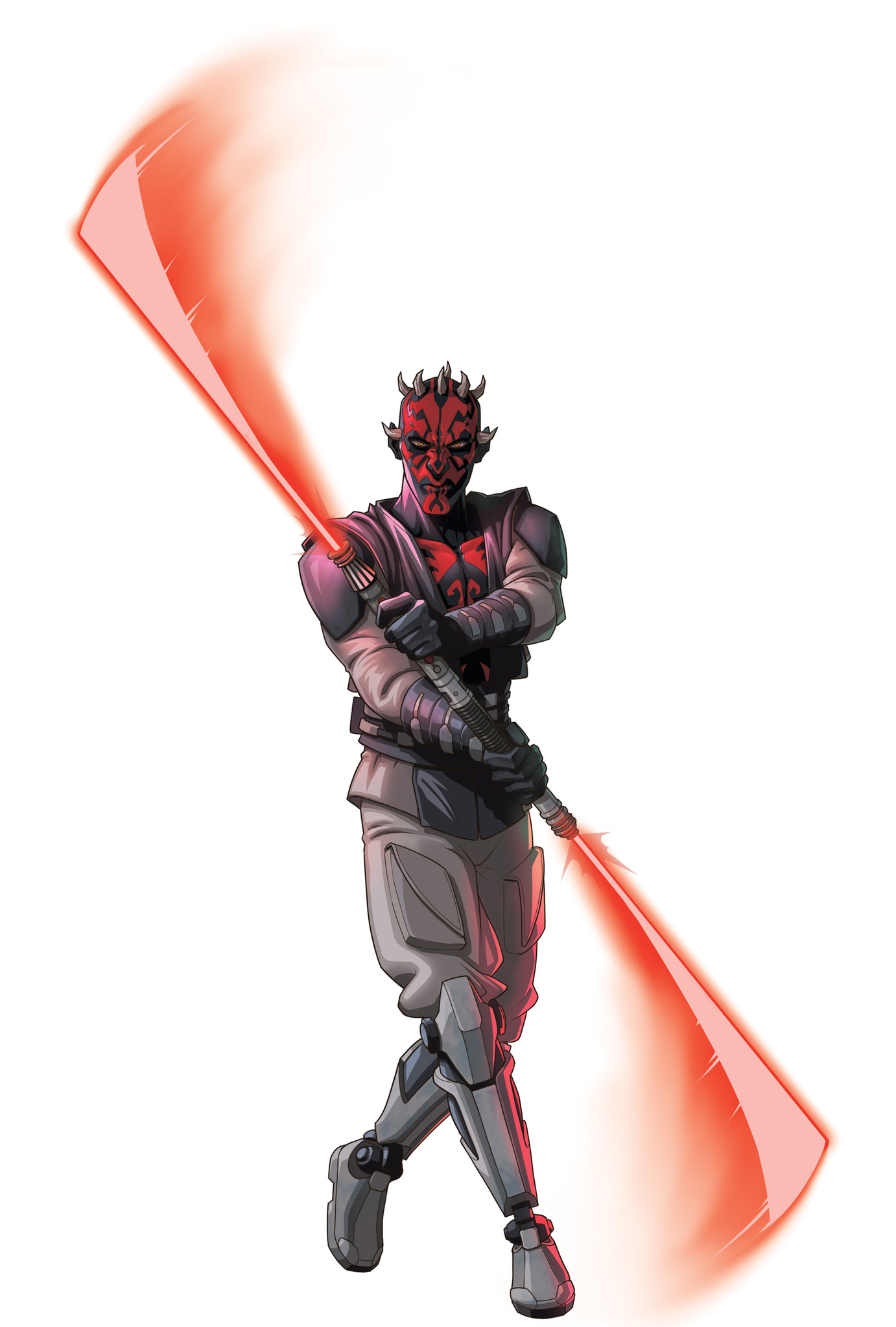
Meanwhile, the Sith made it a point to kill a Jedi so as to claim their lightsaber crystal, then bleeding the crystal to bend it to the dark side. Next, the Sith would either claim the hilt of the Jedi they had slain as their own or build their own hilt to accommodate the now-corrupted crystal. While it was Sith tradition for a Sith to kill a Jedi themselves for their crystal, this was not uniform; the Sith apprentice Maul, for example, was equipped with his dual-bladed red lightsaber before he had the chance to kill his first Jedi, which finally came for Maul when he killed the Padawan Eldra Kaitis. A Jedi who had fallen to the dark side, such as Count Dooku, might simply use the same lightsaber hilt they had constructed as a Jedi as a Sith Lord, albeit now with the red blade of their new order.
Variations
The sheer number of Jedi active during the days of the Galactic Republic naturally resulted in countless variations in the designs of lightsabers. Some of these modifications were merely for the exterior looks of the saber, while others enhanced the sabers functionality in unique ways. While the traditional single bladed lightsaber was the design most Jedi used, some preferred creative adaptation of this classic weapon.
There also existed a type of blaster known as a lightsaber rifle which was designed to be combined with a lightsaber. To work, the user would insert a standard lightsaber into a slot on top of the rifle. Once loaded, the weapon could fire powerful beams of energy that were highly destructive. Additionally, Jedi Masters Ki-Adi-Mundi and Agen Kolar both owned a lightsaber that had two different colored kyber crystals, allowing it to change colors from green to blue.
Sith lightsaber—The lightsabers wielded by members of the Sith. The designs of Sith lightsabers depended on the user.
Double-bladed lightsaber—Double-bladed lightsabers consisted of a hilt that projected a blade from both ends, resulting in a deadly staff-like weapon.
Hinged double-bladed lightsaber—Was a type of double-bladed lightsaber that could fold in half, making it easier to store while not in use.
Double-bladed spinning lightsaber—A double-bladed spinning lightsaber projected a blade from each end of the hilt. However, the hilt was as long as a single-bladed lightsaber, with a circular rim that, when activated, could spin the blades along a track. This variant was used by the Inquisitorius.
Split saber—A split saber consisted of two separate lightsabers that join together forming a double-bladed lightsaber.
Lightsaber pike—Featuring two yellow plasma blades on each side of the staff, lightsaber pikes were used by the Jedi Temple Guard.
Dual-phase lightsaber—A dual-phase lightsaber contained one or multiple focusing crystals, which allowed its blade length to be extended or shortened in the middle of combat.
Broadsaber—A lightsaber with a broad flat blade that resembled a traditional sword.
Great lightsaber—A great lightsaber was a lightsaber made for individuals with a giant stature.
Crossguard lightsaber—An ancient design dating back to the Great Scourge of Malachor, a crossguard lightsaber consisted of a standard blade with two shorter blades perpendicular to it at the end of the hilt.
Curved-hilt lightsaber—Curved-hilt lightsabers were of a design which featured a hilt with a built in curve. This was usually done to allow the hilt to fit better into the palm, facilitating the use of one-handed fighting styles such as Form II.
Cane lightsaber—A standard lightsaber concealed as the head of a cane. In combat, the handle would be detached from the body of the cane and wielded normally.
Training lightsaber—Training lightsabers were engineered with a permanent low-power setting. As their name indicates, training lightsabers were used for instructional purposes, teaching initiates how to wield a lightsaber.
Shoto lightsaber—A shoto was a short lightsaber. Featuring a shortened blade length, shotos were usually used as the secondary weapon in dual-blade combat.
Guard shoto—A guard shoto was a lightsaber with a hilt perpendicular to the blade that gave a unique way of blocking and attacking.
Lightwhip—A lightwhip had a flexible blade that was several meters long, and could entangle opponents.
Two-piece lightsaber —A single bladed lightsaber that can separate into two pieces, with the main body and grip of the hilt in one part and the other bearing the emitter shroud. To use the lightsaber, the user merely needed to insert the emitter section into the main body and twist to lock them together.
Lightsaber-blaster hybrid—A single bladed lightsaber with an attachment that allowed it to fire blaster bolts.
Darksaber—An unique ancient lightsaber with a black blade that was flattened and came to a point like a traditional sword, rather than the rounded beam of standard lightsabers.
Sickle-bladed lightsaber—A lightsaber that produced a sickle-shaped blade.
Lightfoil --A single handed slim lightsaber used by early Makashi practitioners resembling a rapier.
Contained energy axe —-A variation that resembles a vibro-ax which produces a plasma blade edge.
Purpose
We do not want to be powerful. We wish to stand tall against the dark. Our tools reflect that goal. Especially our chosen weapon. We all wield the same one, with minor variations. The lightsaber. We could make kyber bombs or blasters… Indeed, it's been tried. There are a few weapons like that in the sealed archives. But anyone can fire a blaster. Very few can safely and skillfully wield a lightsaber. Everyone in the galaxy knows this to be true. We want our opponents to know that we use a weapon that requires intention. Training, precision and choice. The lightsaber symbolizes the care with which we approach our gifts through the Force and the care with which we wield them. It reminds others that while we could do more… We very purposefully do not. Take it, my Padawan. We choose a weapon with limitations—with difficulties. You cannot use a lightsaber to destroy a city or a planet. Every death or injury it inflicts must be precisely chosen. The lightsaber tells the galaxy that the Jedi are not destroyers. We are protectors.
The intended purpose of the lightsaber was to bring an end to conflicts, being designed to injure no more than its wielder chose. Additionally, there was no collateral damage from lightsaber strikes unless the blade happened to hit a target on accident. If death was deemed necessary, the blade was designed to kill quickly. Even though the Jedi held themselves to these rules, the groups like the Sith chose to use their lightsabers in ways that caused suffering.
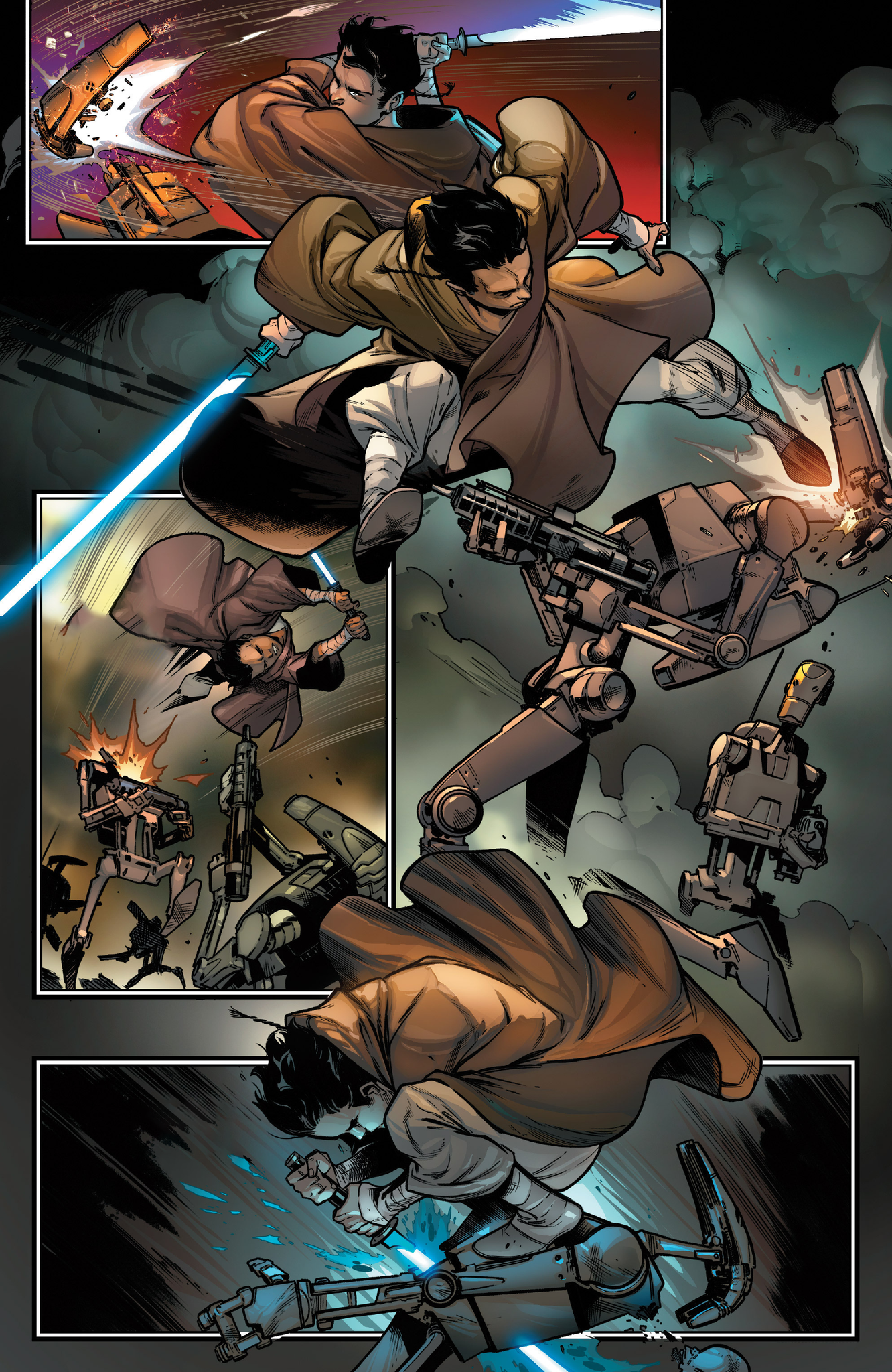
Jedi Padawan Bell Zettifar felt that the lightsaber was designed to give an enemy a chance to surrender, as its trademark glow and hum made it easy to spot and hear. Furthermore, he believed the blade's sound was one of training, focus, and skill; it was the sound of a Jedi's last resort and was the art of their Order.
Although Sith were also known to wield lightsabers, they viewed the dark side of the Force as their primary weapon, with the saber serving as a symbol of the dark side and the way it consumed all who opposed it.
Combat
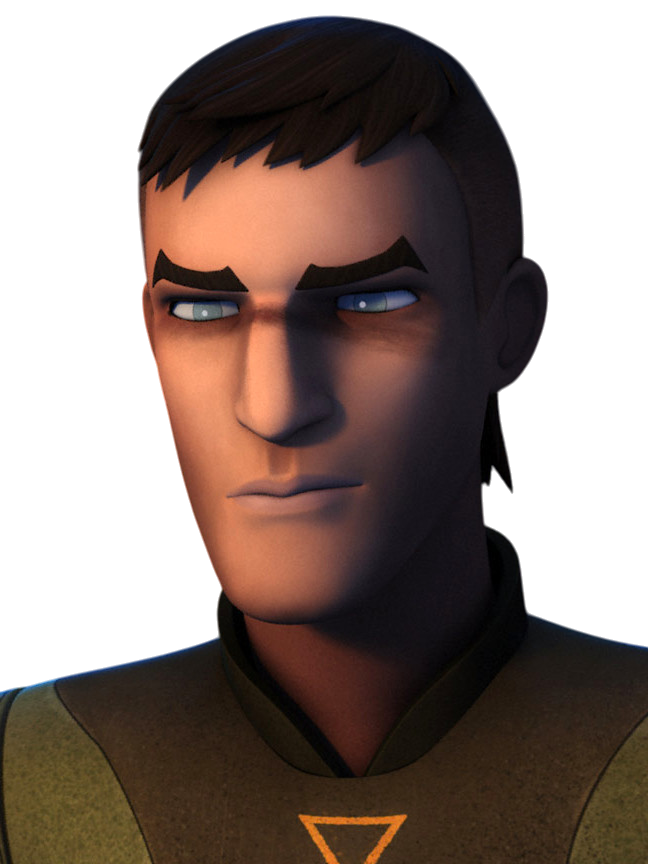
Energy constantly flows through the crystal. You're not fighting with a simple blade as much as you are directing a current of power. Your thoughts, your actions, they become energy. They flow through the crystal as well and become a part of the blade.
Lightsaber combat was the preferred fighting method used by lightsaber wielders. Throughout the millennia, many combat styles were refined into the seven "classic" forms that serve as the standard, and numerous other fighting methods that call for advanced levels of skill. Lightsabers were most often held with both hands during combat.
Rituals
By the right of the Council, by the will of the Force, Kanan Jarrus, you may rise.
Lightsabers were an integral part of the knighting ceremonies of the Jedi Order. During the ceremony, a Padawan would have their Padawan braid ritualistically severed by the presiding Jedi Master. Kyber crystals were collected from a Jedi's lightsaber if they fell in battle. Many of these crystals were then formed into the Kyber Arch, which became a site for meditation in the Jedi Temple.
Practical applications
Lightsabers were able to cut through most materials. The glowing plasma blade could be used as a convenient light source when necessary. Lightsabers can also be used to evaporate some liquids due to the heat it generates.

Sources
Adapted from the original article, under CC BY-SA 3.0.